Zone Defence and Man-to-Man: Two Ways to Share Responsibility
Zone defence and man-to-man shape who guards each attacker and area. Learn to read the movement, handovers and trade-offs behind each approach.
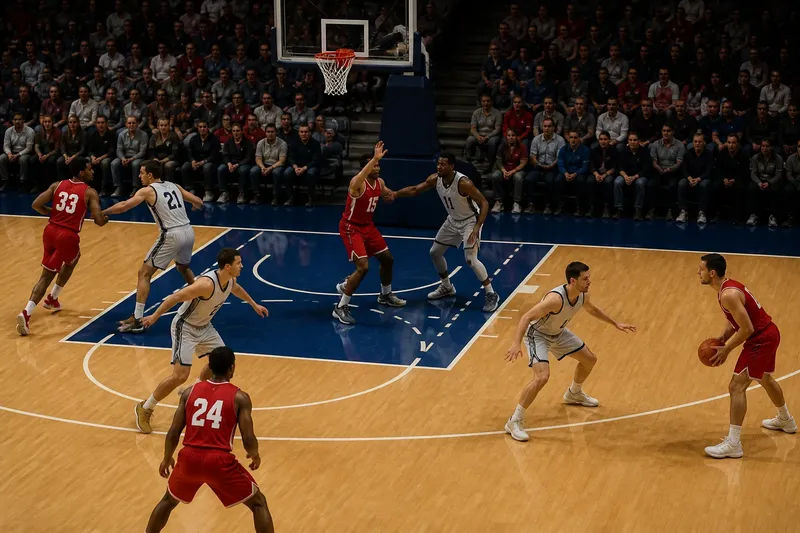
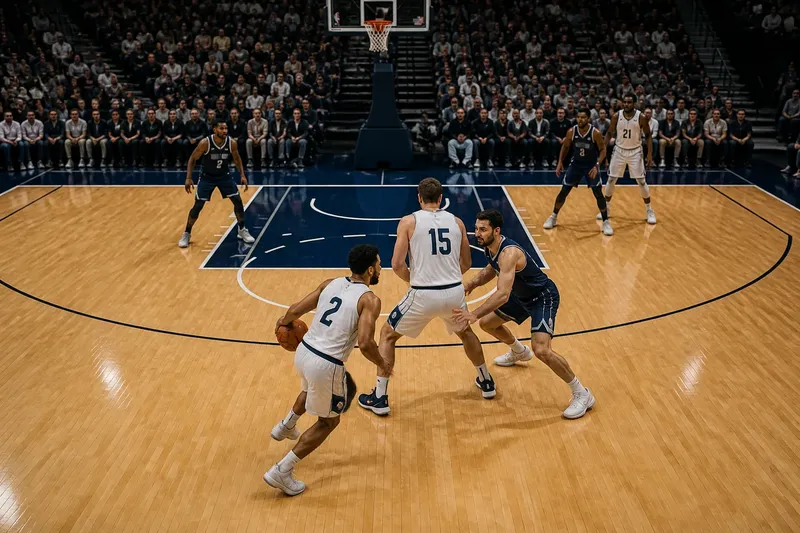
At a basketball game, the ball swings from the wing towards the corner. Several defenders shift together, while another stays close to an attacker near the basket. Zone defence and man-to-man explain those different movements: one assigns responsibility mainly by area, the other by opposing player.
To read the defence, watch what happens after an attacker moves away from the ball. Does the same defender keep following, or does a teammate take over as the group adjusts? That clue can help explain why an attack finds a route to the basket, a pass into a gap or a less comfortable shot.
Start by locating the responsibility
In man-to-man defence, each defender is primarily matched with an opposing player. A defender tracks that player as they cut across the court, move towards the ball or drift away from it. The assignment centres on a person, although defenders can exchange opponents or briefly leave their match-up to help a teammate.
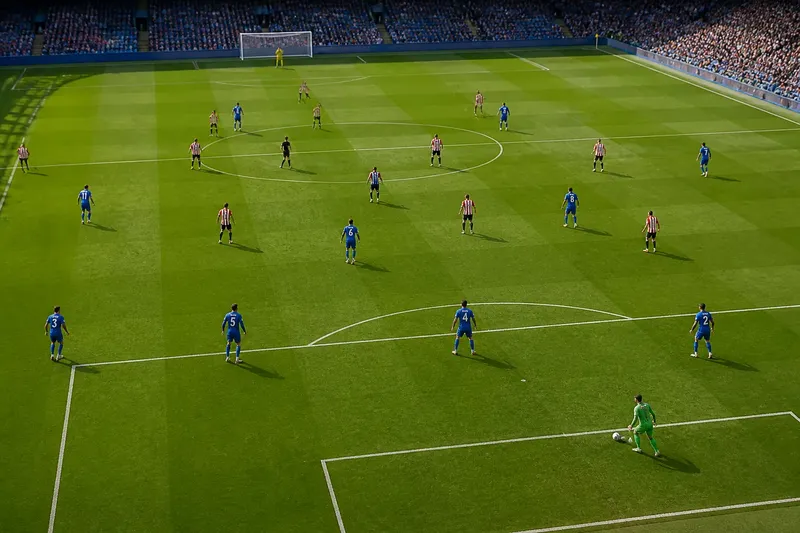
In zone defence, each defender is primarily responsible for an area. An attacker entering that area becomes a concern, but the defender does not necessarily follow them across the court. As the ball moves, the group shifts to cover its side of the court and maintain protection near the basket.
Neither approach is a rigid picture. A zone defender may step out to pressure a shooter, while man-to-man defenders may switch assignments. Look for the responsibility that persists after the immediate movement: does a defender follow an attacker, or return to an area after a teammate takes over?
Read the first movement after a pass
When a pass travels across the perimeter, watch the defender near the receiver. In man-to-man, that defender will usually move with their assigned attacker, while the others keep track of their own opponents.
In a zone, several defenders often shift towards the ball together. The nearest player may step out, while teammates move behind or alongside them to keep the area near the basket covered. The formation can vary, so look for the group’s coordinated movement rather than a fixed arrangement.
A single pass may not settle the question. A man-to-man defence can rotate after an attacker moves, and a zone defender may follow someone for part of a route. Watch the next movement: a handover followed by a return to an area supports a zone reading; continued tracking across the court supports a man-to-man reading.
Notice what happens when an attacker cuts
A cut is a quick run into open space, often towards the basket or behind a defender. In man-to-man, the defender assigned to that attacker generally tries to stay with them. A teammate may intervene if the cut threatens the basket, prompting a switch or brief exchange of responsibilities.
In a zone, a defender may pick up the cutter while they cross that defender’s area, then pass them to a teammate as they move on. Watch for a clear handover: one defender turns towards the next area while the other returns to watching the ball and nearby attackers.
If two defenders both turn towards the cutter, their movement can leave a different attacker briefly free. If one takes the cutter and the other resumes their area, the handover appears coordinated. Those visible choices are more informative than deciding from the cutter’s movement alone.
Watch how each scheme handles a screen
A screen is an attempt to obstruct a defender and create room for an attacker. In man-to-man, the defender can try to move around the screen, while teammates may call a switch and take over the attacker. Watch whether the original defender continues after the screen or whether two defenders exchange opponents.
In a zone, a screen can interfere with the defender covering an area rather than simply separating one defender from one attacker. The nearest teammate may step across, and the group can adjust its positions to keep the ball and basket covered. Look for the change in spacing: do defenders regroup around their areas, or do they continue tracking particular opponents?
A screen alone does not identify the defence. Teams can use different responses within either approach, so follow what the defenders do after the obstruction and on the next pass.
Compare the trade-offs without naming a winner
Man-to-man can make it easier to see which defender is responsible for a particular attacker. That may help against opponents who move constantly or create danger from different spots. A screen, switch or drive can then force defenders to decide whether to keep their assignment or exchange opponents.
Zone defence organises protection around areas, with several defenders able to stay near likely routes to the basket. Depending on the formation and its movement, attackers may find room farther from the basket or between neighbouring areas. Moving the ball and changing positions can make those spaces more visible.
Neither label tells you whether a defence is succeeding. A zone may be slow to shift, while a man-to-man unit may communicate clearly; either can also change its approach during a game. Judge what the defenders actually cover, rather than treating an open shot as proof of one scheme.
Check the visible clues before choosing a label
- Check one defender as an attacker crosses the court. If the defender stays with that attacker, consider man-to-man; if they pass the attacker on and resume watching an area, consider zone.
- Check how defenders respond to a pass across the perimeter. If one defender follows the receiver while others stay with their assignments, consider man-to-man; if several shift together, consider zone.
- Check who takes a cutter entering a new area. If the same defender tracks the cutter across the court, consider man-to-man; if another defender takes over, consider zone.
- Check what happens after a screen. If defenders exchange opponents, note a switch within a likely man-to-man approach; if the group resets around its areas, consider zone.
- Check whether defenders remain near particular opponents during a brief pause. If each stays close to a specific player, consider man-to-man; if they settle into court positions while watching several attackers, consider zone.
- Check whether the same pattern appears on another settled attack. If it repeats, use that pattern as your working label; if the clues conflict, describe the movements without forcing a single label.
Imagine an invented situation: a team begins in a settled half-court defence, and an attacker cuts from the left wing towards the basket. Their defender follows across the lane, while nearby defenders stay close to their own opponents; after a screen, one defender points and takes the cutter as the original defender moves towards the screener. The observable result is a clear exchange of opponents, so man-to-man is the stronger reading of this possession, even though the switch briefly changes who guards whom.
What should you watch for when the defence changes?
Can a team switch between zone and man-to-man?
Yes. A team can change its approach during a game, and the shift may become clear only on a later settled attack. Look for a repeated change in whether defenders follow opponents or organise around areas.
Does a defender always follow their player in man-to-man?
No. A defender may help a teammate, switch after a screen or respond to a dangerous drive. Watch the broader pattern across several movements rather than treating one separation as decisive.
Does zone defence mean defenders ignore individual attackers?
No. Defenders watch attackers entering their areas, especially near the basket or as they prepare to receive a pass. Their basic responsibility is organised around space, so a teammate may take over as an attacker moves elsewhere.
What does an open shot tell me about the defence?
It tells you that the attack found an opportunity, but not by itself which defence was being used. Trace the pass and check whether a defender followed an attacker, exchanged opponents or moved to cover an area.
Describe the movement before judging the defence
For zone defence and man-to-man, the most useful viewing habit is to describe one possession plainly: the ball moves, a defender follows or holds an area, and teammates respond to a cut or screen. Those details are easier to see than the full shape of a defence during a fast sequence.
Pay particular attention to who takes over after a screen or cut. If the defenders’ actions leave you unsure of the label, describe the handover itself; it is still a clear account of how the team organised its defence.