Why a Basketball Screen Gives the Ball Handler a Choice
A basketball screen can create a brief opening or prompt a defensive switch. Learn to read the handler’s options, the screener’s movement and the result.
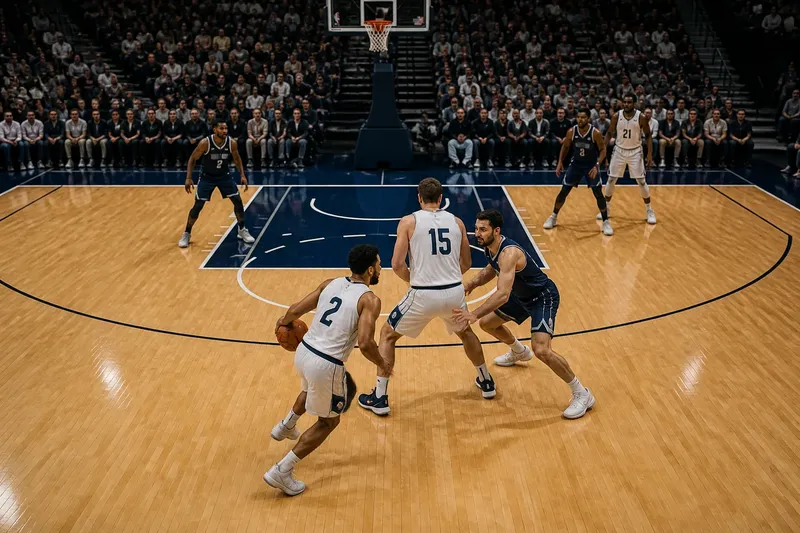
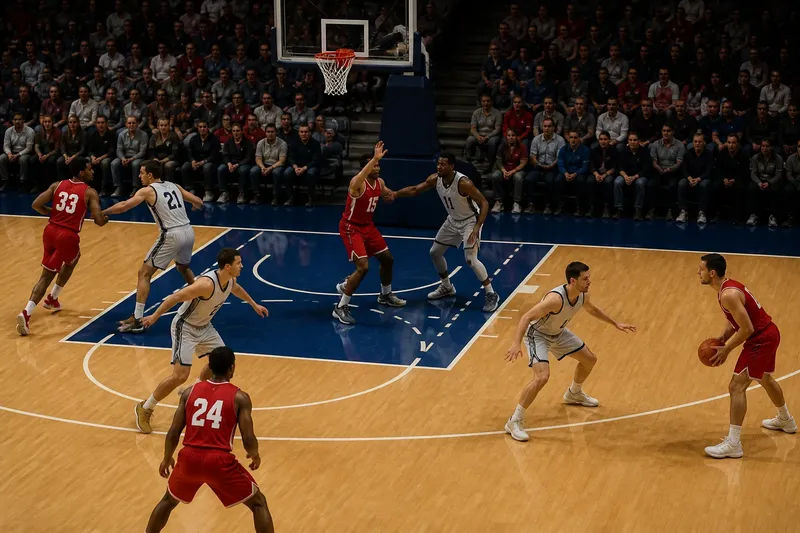
A guard dribbles towards the top of the key while a teammate plants nearby. The defender glances at the screener, then has to choose a route around them. That brief pause is why a basketball screen gives the ball handler a choice: it changes the immediate problem without deciding the play.
To read the action, follow the screen’s effect on the ball handler and the screener rather than tracking defensive rotations. Watch whether the handler turns, stops or passes, and whether the screener remains in place or moves towards the basket. Those visible choices reveal what the screen was designed to make possible.
A basketball screen changes the handler’s immediate options
A screen is an offensive player’s attempt to occupy space in a defender’s path so a teammate can move more freely. A screen for the ball handler is often called a pick. The screener does not have to touch the defender: taking a legal position in the right place can affect the route.
Imagine the handler moving right as a teammate sets a screen just outside the defender’s path. The handler can turn tightly around it, pause to see how the defender reacts, or move in the opposite direction. The screen creates a decision point; it does not dictate which option is best.
The screener’s next movement matters too. They may hold their position, step away to give the handler more room, or roll towards the basket after the handler turns. Each choice changes the passing options available in that moment.
The handler’s timing determines how useful the screen is
A handler often approaches closely so the defender cannot simply slip through the gap between the two offensive players. If the handler arrives too early, the defence has time to adjust. If they stay too far away, the defender may find an easy route around the screen.
The screener must be set before the handler turns. If the screener is still moving into place, officials may judge the action under the applicable rules. A controlled approach followed by a sharp change of direction can make the handler’s choice clearer to the spectator.
Say an invented game has a guard whose defender keeps following closely over a screen near the top of the key. The guard slows, waits until the screener is stationary, then turns tightly towards the middle. The expected visible result is a moment of separation; the guard can keep moving if the route stays clear, or pass to the screener if the defender in front closes it.
The handler can turn, stop, pass or reject the screen
The handler’s options depend on the space and on the screener’s movement. Look for these possibilities:
- Turn around the screen: The handler changes direction close to the screener. If a clear route appears, they can continue towards the basket; if it closes, they can stop or pass.
- Pull up: The handler stops for a jump shot. If the defender has gone under the screen and left room, a shot may be available; if not, the handler can keep the dribble alive.
- Pass to the screener: If the screener moves towards the basket and is available, the handler can feed them. If that lane is covered, the handler can look to a teammate elsewhere.
- Pass away from the screen: The handler can move the ball to a teammate on the other side. If that teammate is covered too, the offence can retain the ball and reset.
- Reject the screen: The handler goes in the opposite direction from the screen. If the defender has committed towards the expected turn, the alternate route may be open; if it is not, the handler can pull back.
These are options, not a required sequence. A pass can be the useful result even if it does not lead directly to a shot, while a dribble around the screen may lead nowhere if the route is already crowded.
How can you read a basketball screen as it unfolds?
What should you watch first?
Start with the screener’s position and the handler’s direction of travel. Then notice whether the handler turns close to the screen, pauses, or moves away from it; each action helps explain the choice being made.
How can you tell if the screen affected the play?
Look for an observable change: the handler takes a new route, the defender loses close contact, or the handler has to stop and pass. If none appears, the screen may not have changed the immediate options, so follow what the handler does next instead.
What does the screener do after the handler turns?
The screener may stay still, move away to create space, or roll towards the basket. If they move into a clear passing lane, a pass may be available; if the lane is covered, the handler may continue with the dribble or look elsewhere.
Does a made shot mean the screen worked?
Not by itself. A shot can go in despite a defender staying close, while a useful opening can lead to a miss; judge the screen by the options it created, not only by the result.
A worked example shows how the choices connect
Imagine an invented possession with the following starting point: a guard has the ball near the top of the key, a teammate is ready to screen on the guard’s right, and the defender is close enough to contest a direct drive. These are illustrative details, not claims about a real game.
- The screener becomes stationary on the guard’s right. The guard approaches closely, so the defender has to choose a route around the screener rather than follow through a wide gap.
- The guard turns tightly towards the middle. The defender trails for a moment, leaving the guard space to continue, but the guard slows because another player is in the route to the basket.
- The screener moves towards the basket and is briefly available. The guard passes to the screener instead of forcing a drive.
- The pass reaches the screener before the route closes. The expected observable result is a chance for the screener to continue towards the basket; if that route is covered, they can pass back or move the ball on.
The useful distinction is between the opening and the decision made with it. The screen creates a moment in which the guard can turn, then the guard’s pause and pass show how the available route has changed.
Why might a screen leave the handler with no clear option?
A screen may have little visible effect if it is set too far away, arrives before the handler is ready, or leaves the defender a wide path around it. In those situations, check whether the handler’s route or timing changes; if neither does, the action has not created an obvious immediate opening.
The screener’s position can also limit the choice. If they are still moving into place, the defender may pass through before the screen is established. If the area is already crowded, the handler may have to keep the dribble alive or move the ball elsewhere.
Sometimes the purpose is simply to prompt a reaction, such as a change of direction or a momentary pause, before the offence continues with another action. If the handler does not turn or pass at once, watch whether they reset the play or use the screener later.
Read the choice, not just the turn
When a screen begins, keep your attention on three connected details: where the screener stands, what route the handler chooses, and what the screener does next. That sequence makes it easier to understand why similar-looking screens can lead to different actions.
A basketball screen is best read as a short-lived change in the handler’s options. Notice whether the handler turns, stops, passes or rejects the screen, then look for how the screener’s movement affects the next choice. That gives you a more useful account of the play than simply noting that a screen took place.