The Formation Number Is Not a Map
A football formation number is a starting reference, not a fixed map: learn how possession, pressure and match moments reshape players’ positions.
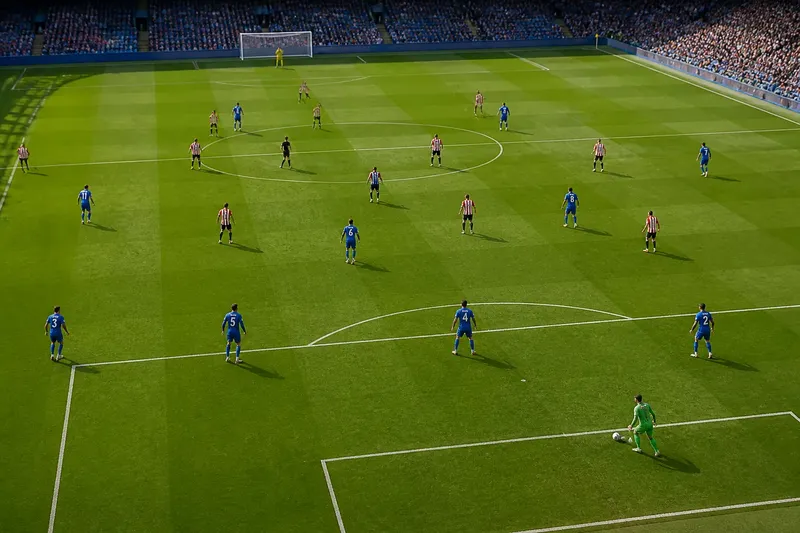
A team listed in a 4-3-3 may look nothing like three neat lines by the time its goalkeeper rolls the ball out. The formation number describes a starting reference for football shape, not a set of coordinates that players must occupy throughout the match.
That distinction helps explain why the same team can appear to change formation without making a substitution. Watch the ball, the opponent’s pressure and the phase of play, and the shape begins to make sense as a moving arrangement rather than a diagram.
A formation label names the starting arrangement
The numbers usually count outfield players from defence towards attack, leaving the goalkeeper out. In a 4-3-3, for instance, the first four refer to the defenders, the middle three to midfielders and the final three to forwards.
Those figures do not tell you exactly how wide the players stand, how far apart the lines are, or what each person does when possession changes. A left-back might advance, a winger might drift inside, and a midfielder might drop towards the centre-backs. All can be part of the same broad starting plan.
Formation labels are useful shorthand for comparing initial roles and overall balance. They are less useful as a literal map: two teams with the same label may behave quite differently, while one team may show several distinct shapes during a single passage of play.
Possession pulls players into different lanes
When a team has the ball, its players spread out to create passing options and make room for movement. A full-back may push up the touchline while a winger moves towards the penalty area; a central midfielder can stay behind the attack as cover or move into a more advanced pocket.
These choices are connected. If one player leaves a space, someone else may occupy it, protect it or use it as a route for a later pass. The shape changes because players are responding to one another, not because they have abandoned their roles.
Imagine a team introduced as a 4-3-3 building from the right side. Its right-back advances beyond the winger, the winger comes infield, and a central midfielder holds closer to the centre-backs. From the stands, the line of four at the back may now look like three, with extra players gathered across midfield. The expected result is a different visible arrangement that still offers width, an inside passing option and cover behind the ball.
Pressure can make the same team look more compact
Without the ball, a team often narrows the gaps between its players to make forward passes harder. The wide forwards may retreat, midfielders may gather closer together, and defenders may hold a line nearer their own goal. The original formation label remains a clue to the starting responsibilities, but the defensive outline may resemble a different arrangement.
Where the pressure begins matters. A team that closes down near the opposing penalty area can leave players high up the pitch, ready to challenge a pass. A team defending deeper may bring more players behind the ball and leave a forward isolated as an outlet.
Look for who moves first when possession is lost. If a midfielder drops between the centre-backs, the full-backs may be able to advance cautiously; if the wide players recover quickly, the defenders may hold a higher line. One movement alters the space available to the others.
Match moments change the shape before anyone changes position
A team’s outline can shift with a goal kick, a throw-in, a counter-attack or a set piece. These moments set different demands: a goal kick asks players to offer short and long options, while a quick attack rewards forward runs into open space.
Even within open play, the ball’s location affects the picture. When it is on one flank, the far-side winger may move towards the goal rather than stay wide, and the opposite full-back may tuck in to guard against a counter-attack. The team has not necessarily switched formation; it has adjusted to where danger and opportunity sit.
Set pieces make the difference especially visible. The same players who were spread across the pitch in possession may cluster around the box to attack a corner, while others stay back. Formation numbers describe neither that temporary arrangement nor the movement that follows the kick.
What should you look for when a formation seems to change?
Does the team have the ball?
Start by separating the shape in possession from the shape without it. Players may spread out to build attacks, then close together when defending, so a single label cannot capture both pictures.
Which player is leaving the line?
Notice whether a full-back advances, a midfielder drops or a forward comes short. That movement often explains the apparent shift better than trying to rename the formation straight away.
Where is the opponent applying pressure?
Pressure near the ball can pull several players towards one side, while a team under sustained pressure may retreat as a unit. Check the far side too: players there often move to keep the team balanced or prepare an outlet.
Is the change temporary or repeated?
A brief adjustment for a corner or counter-attack is not necessarily a new formation. If the same player relationships return across different passages, you may be seeing a regular tactical pattern rather than a one-off response.
Read relationships rather than counting bodies
For a clearer view, follow the spaces between players as well as their locations. Ask who is offering width, who is available between the lines, and who remains behind the ball if an attack breaks down. These relationships reveal the team’s intentions more reliably than counting defenders in a single frozen moment.
It can also help to compare the same team across two situations: one settled attack and one defensive sequence. You might notice that the wide players stay high when their side has possession but drop alongside midfield when the opposition builds. That contrast shows how responsibilities shift without requiring a new label.
The formation number is still a helpful opening clue, but it is not the whole story. When you hear a team called a 4-3-3, treat that as a starting reference; to understand what is happening, watch how its players rearrange around the ball, the pressure and the next moment of play.