Your First Live Match: Choose One Player to Follow
Follow one player at your first live match to spot off-ball runs, useful positions and team patterns without trying to watch the whole pitch.
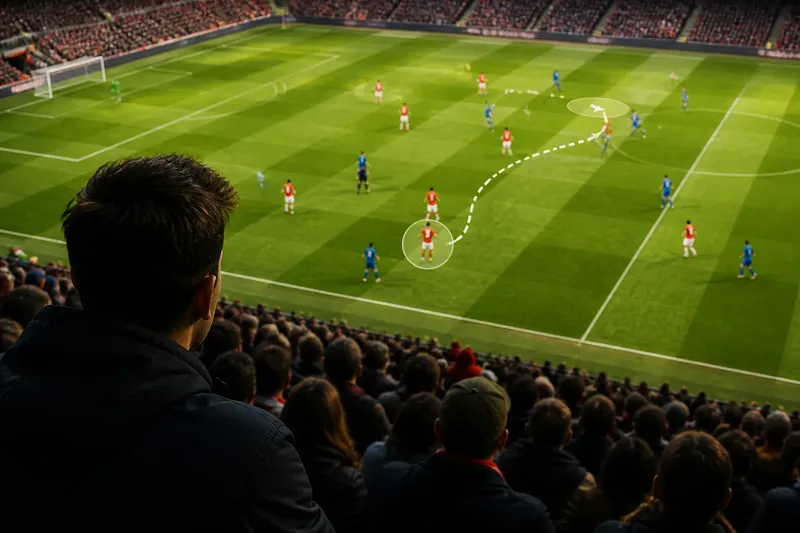
You settle into your seat, the ball changes ends, and suddenly the player you meant to watch has vanished into a crowd. At your first live match, choosing one player to follow can make the game easier to read—but only if you let your attention travel beyond the ball.
The aim is not to keep that player in view every second. It is to notice where they go before and after the ball arrives, and what those movements might make possible for their team. These common snags can help you get back on track without turning the match into homework.
When the ball keeps pulling your eyes away
What causes it: The ball is the clearest moving object on the pitch, and the crowd often reacts to it as one. You may follow a pass automatically, then realise the player you chose is somewhere behind the action.
What to try: Let the ball have a quick glance, then look back to your player. Ask a small question: are they moving towards space, holding their position, or adjusting to a teammate? You do not need to see the next touch to notice that movement.
If the player is far from the ball, watch the area around them rather than trying to keep their face in sight. A forward may drift towards a defender; a midfielder may slide across to offer an option. Those small shifts can matter even when no pass follows.
When you cannot decide whom to follow
What causes it: Before kick-off, a team sheet can make several players seem equally interesting. Choosing a star player may also leave you watching the same obvious actions as everyone else.
What to try: Pick someone whose role gives you a clear movement question. A full-back might push forward when their team has the ball; a centre-forward might move across the defensive line to open a lane. You can also choose a player near your seat, where their position is easier to follow.
Keep the choice flexible. If your player is substituted or spends long stretches hidden behind other bodies, switch to a teammate with a similar role. The point is to observe a role in motion, not to pass a test about one particular person.
When the player disappears from view
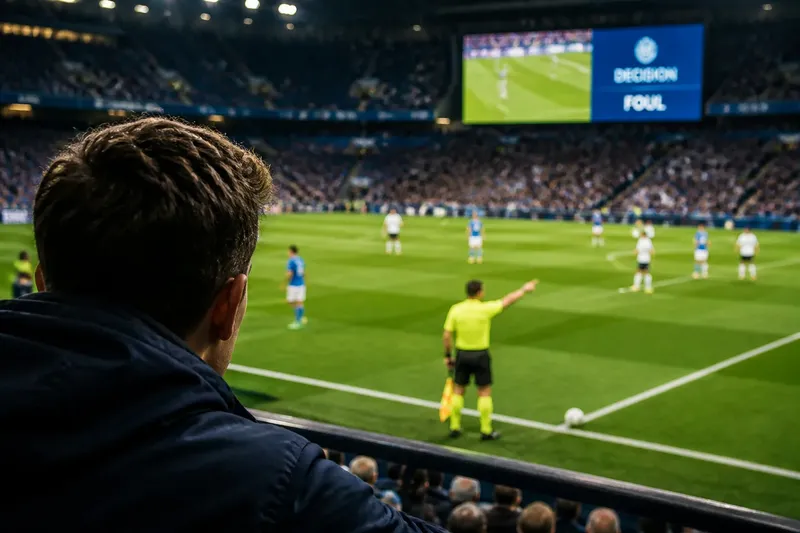
What causes it: A live match has no camera operator choosing a helpful close-up. Bodies overlap, play moves to the far side, and the player may slip beyond the edge of your view.
What to try: Use landmarks to find them again: the touchline, the halfway line, the penalty area, or a teammate you can recognise. Then scan the space where their role would usually take them. You are looking for a position, not a perfect view of their shirt number.
At a large ground, the tactical picture may be easier to see from higher seats, while lower seats can make individual movement feel more vivid. Neither view is automatically better; use whichever gives you a reliable reference point and accept that some moments will be obscured.
When off-ball movement looks like aimless running
What causes it: A run without a pass can seem pointless if you judge it only by whether the runner touches the ball. But a player may be making room for a teammate, drawing a marker away, or preparing for a later phase.
What to try: Watch the defender as well as your player. Does the defender follow, hold their ground, or pass the runner to a teammate? Then look for what changes nearby: a teammate may find more room, or the defence may have to shift across.
Say you choose a winger who starts near the touchline. When their team builds an attack, they move inside and a teammate takes the wide lane; you might then see the defender hesitate over whom to track. That invented situation offers a useful question to watch for, not a prediction that every move will work.
When the view changes as possession changes
What causes it: A player’s task can change quickly when their team loses the ball. The same midfielder who offered a passing option may now close down an opponent or retreat into a defensive position.
What to try: Notice the moment possession turns over, then follow your player’s first response. Do they press the nearest opponent, cover a route forward, or drop back towards their own goal? You may not know the coach’s exact instruction, but the direction and timing of the movement are visible.
Do not treat a pause as proof that the player has stopped contributing. They may be holding a position that limits an opponent’s route, or waiting for teammates to recover. Check where the nearby players are before deciding what the stillness might mean.
When a single player’s movement raises questions?
Should I follow the player with the ball?
You can, but a ball carrier gives you less chance to see how a teammate supports them away from the action. For a first viewing plan, try a player who spends much of the match moving into or protecting space.
What should I watch after a pass?
Look for where the passer goes next: do they move to receive the ball again, stay behind the play, or shift to cover a teammate? Their next position may reveal a role more clearly than the pass itself.
What if I lose track of my player?
Return to a simple landmark, such as the halfway line or touchline, and scan the area that fits their role. Missing a spell of movement is normal; you can resume when the player comes back into view.
Is it useful to switch players during the match?
Yes, if your first choice is repeatedly out of sight or their role gives you little to follow. Make the switch at a natural pause and choose someone whose movement offers a different, clear question.
When you try to watch everything at once
What causes it: Once you start noticing runs, pressing and defensive shape, it is tempting to track every player and decode every decision. That can pull you away from the simple reason for your choice: following one person’s movement.
What to try: Keep one question in mind for a passage of play, such as “Where does this player go when their team attacks?” Later, you can switch to “What do they do when the ball is lost?” Let the match supply the answers; no notes or specialist vocabulary are required.
If you want a small reminder, jot down a role and a question on your phone before the game, then put it away while play is active. For example: “left-back—does she move forward when the winger has the ball?” The note gives your attention a home without competing with the match.
When your first viewing plan feels too strict
A player-following plan is a way into the match, not a rule that you must obey. Watch the ball when a moment catches your attention, enjoy the crowd’s reaction, and return to your player when the play settles.
For your next live match, choose one player whose role interests you and follow the space they move into as well as the ball they may receive. That simple habit can turn a busy field into a series of readable choices—and give you a reason to look up before the pass arrives.